
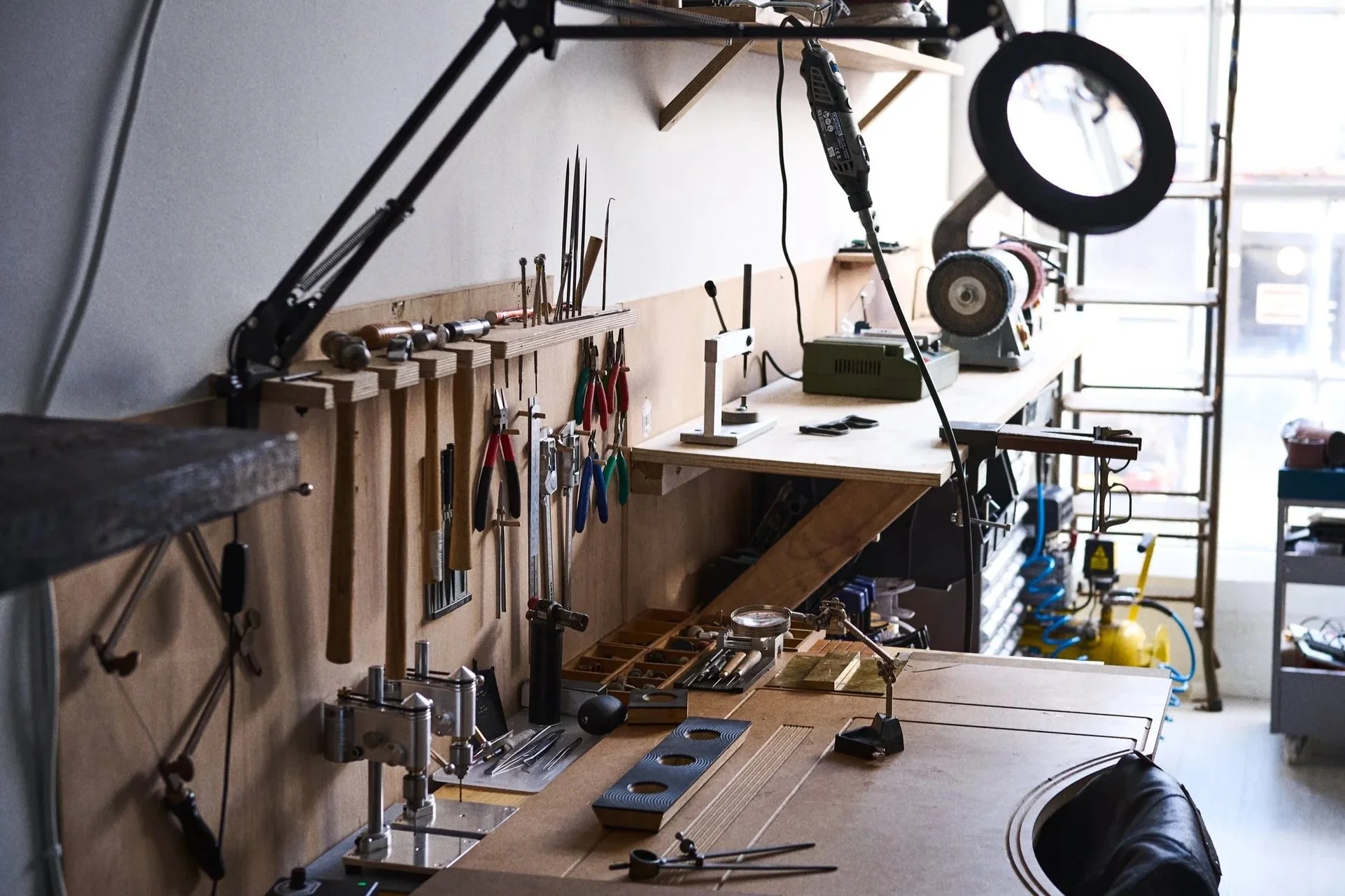
At Bench
At first, the shape was clear.
The details were not.
I knew the frame I wanted to see: the outline, the balance, the impression it would make on a face. What I did not know was smaller and harder. How the hinge should enter the material. How the lens groove should hold. How one degree between front and temple decides whether a frame sits or merely rests.
The material did not give the usual answers. I had to find the method at the bench.
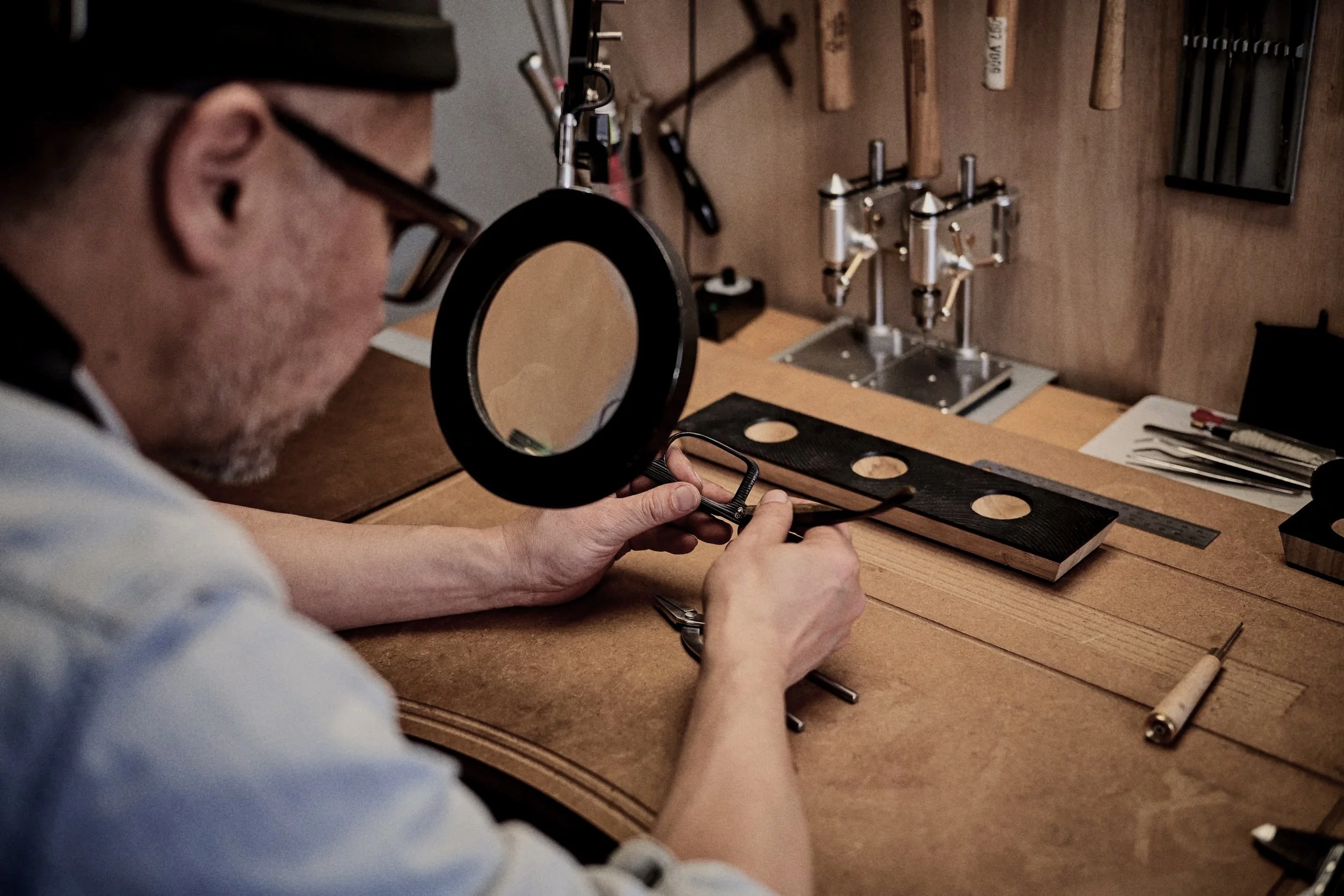

Back and forth
A frame begins as a sheet. I draw the line by eye. The cut executes it. Then the slow part starts.
I sand it. I oil it. I leave it overnight and read it again in the morning. A mark appears that yesterday's light did not show. A high point reveals itself. A line asks to be softened. I assemble the frame, check it, take it apart, correct it, and return it to my hand as many times as it takes.
Nothing is final too early.
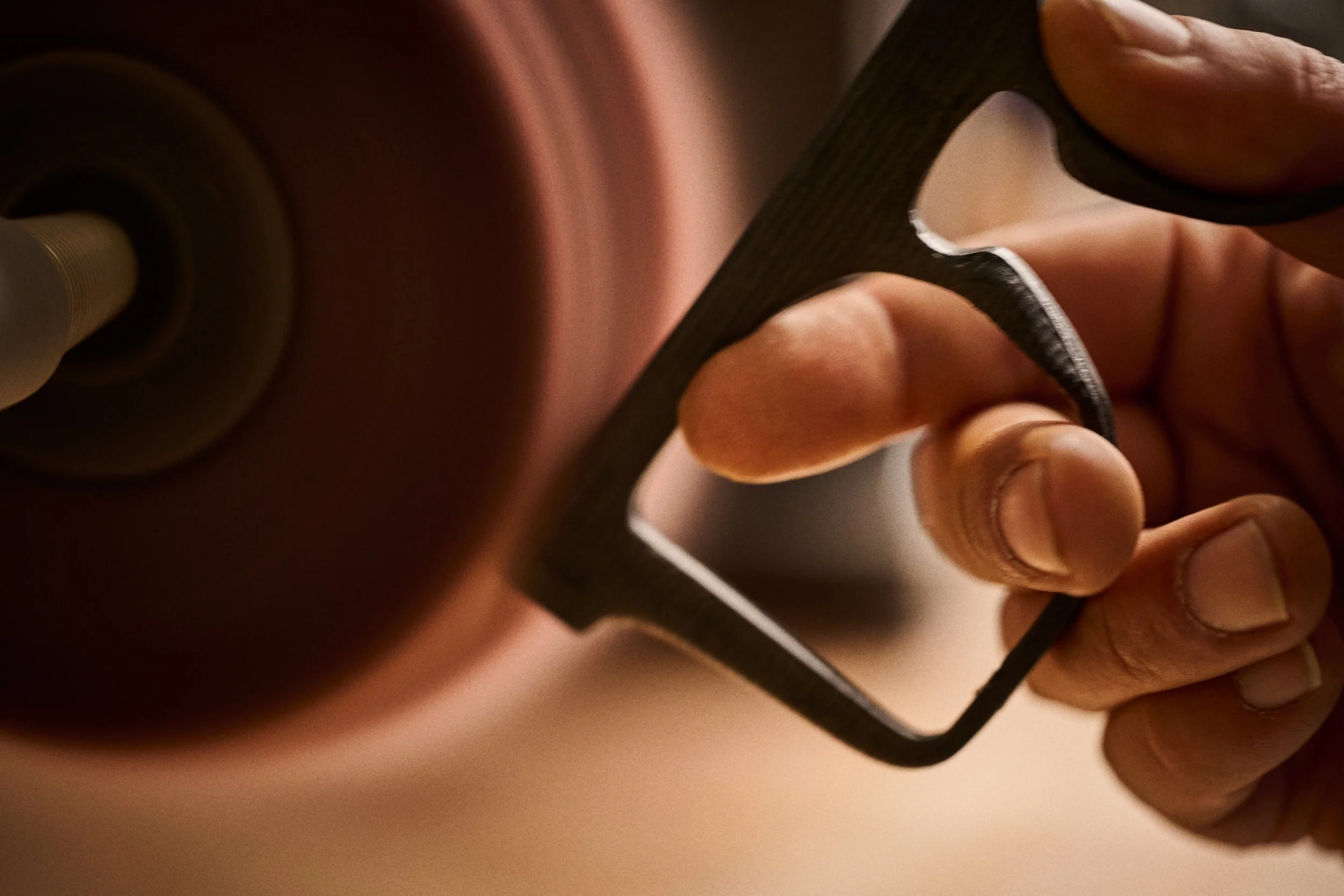
No heat forming. No shortcuts. One maker from first cut to final polish.
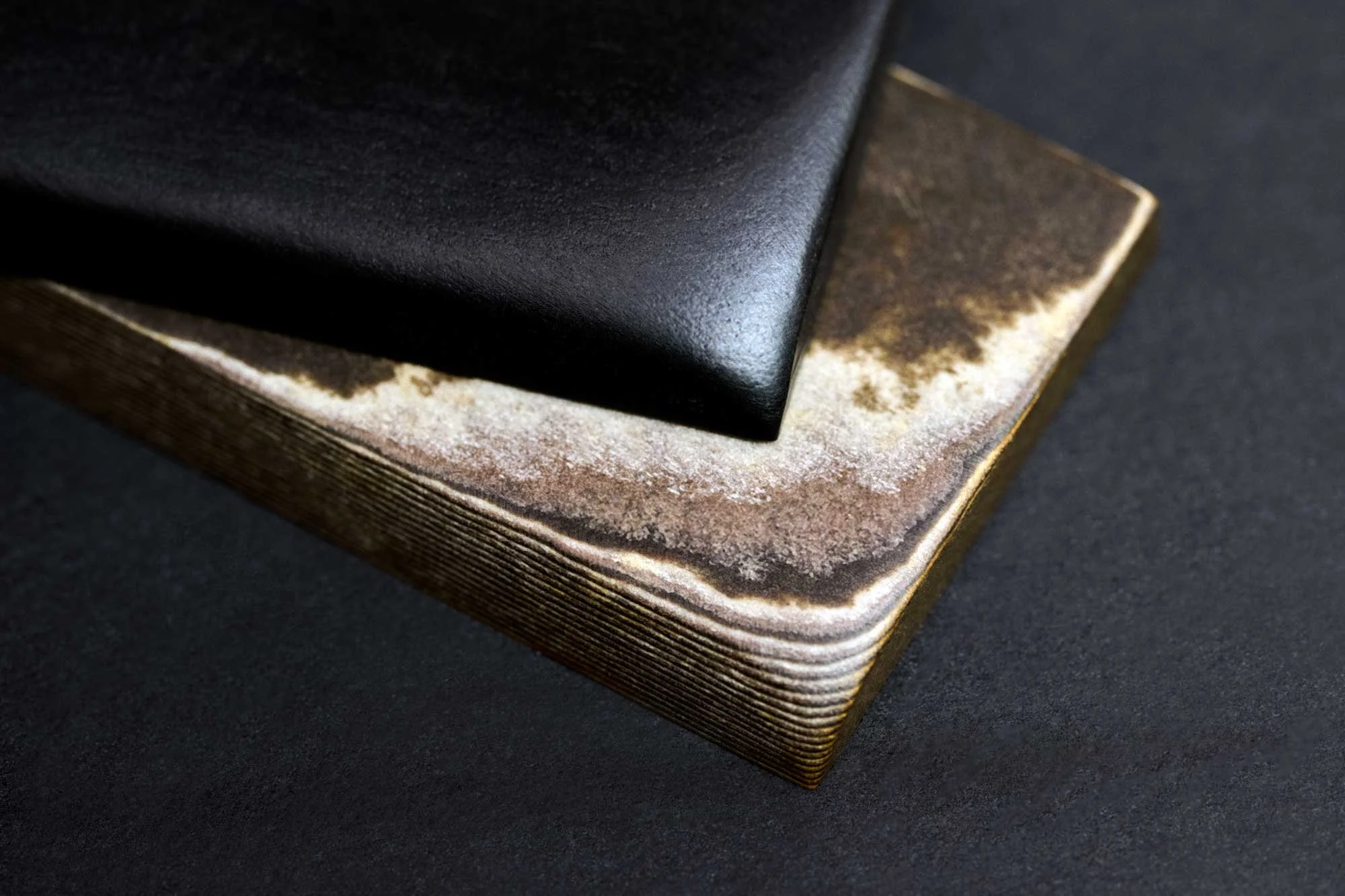
Compressed paper composite
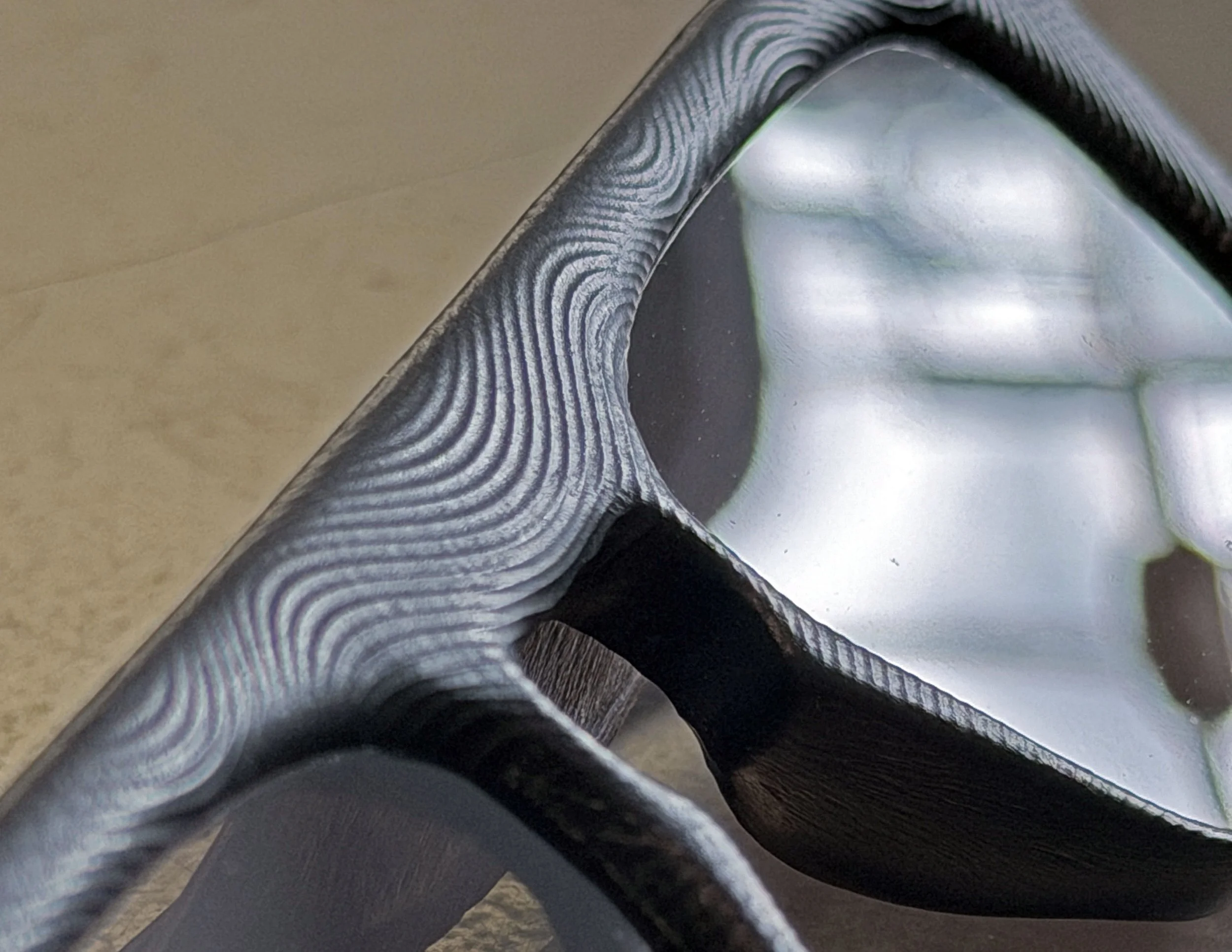
Signature
I draw these lines. They are not the grain of the material.
Hair taught me that some curves are beautiful and some are not. I found the same judgement in karesansui, the dry gardens where gravel is raked into rings around a stone. I wanted it on a frame.
It is there to quiet the object, not to decorate it.
A material with its own pace
Compressed paper composite is dense and stable, and it is worked by removal: cut, sanded, reduced.
Polished, it can suggest wood, stone and something industrial at once. Its strength drew me in. Its patina is why I stayed.
A frame is not finished when I finish it. The colour deepens. A shine comes up where there is friction, as the paper fibre settles. The frame becomes less general and more particular.
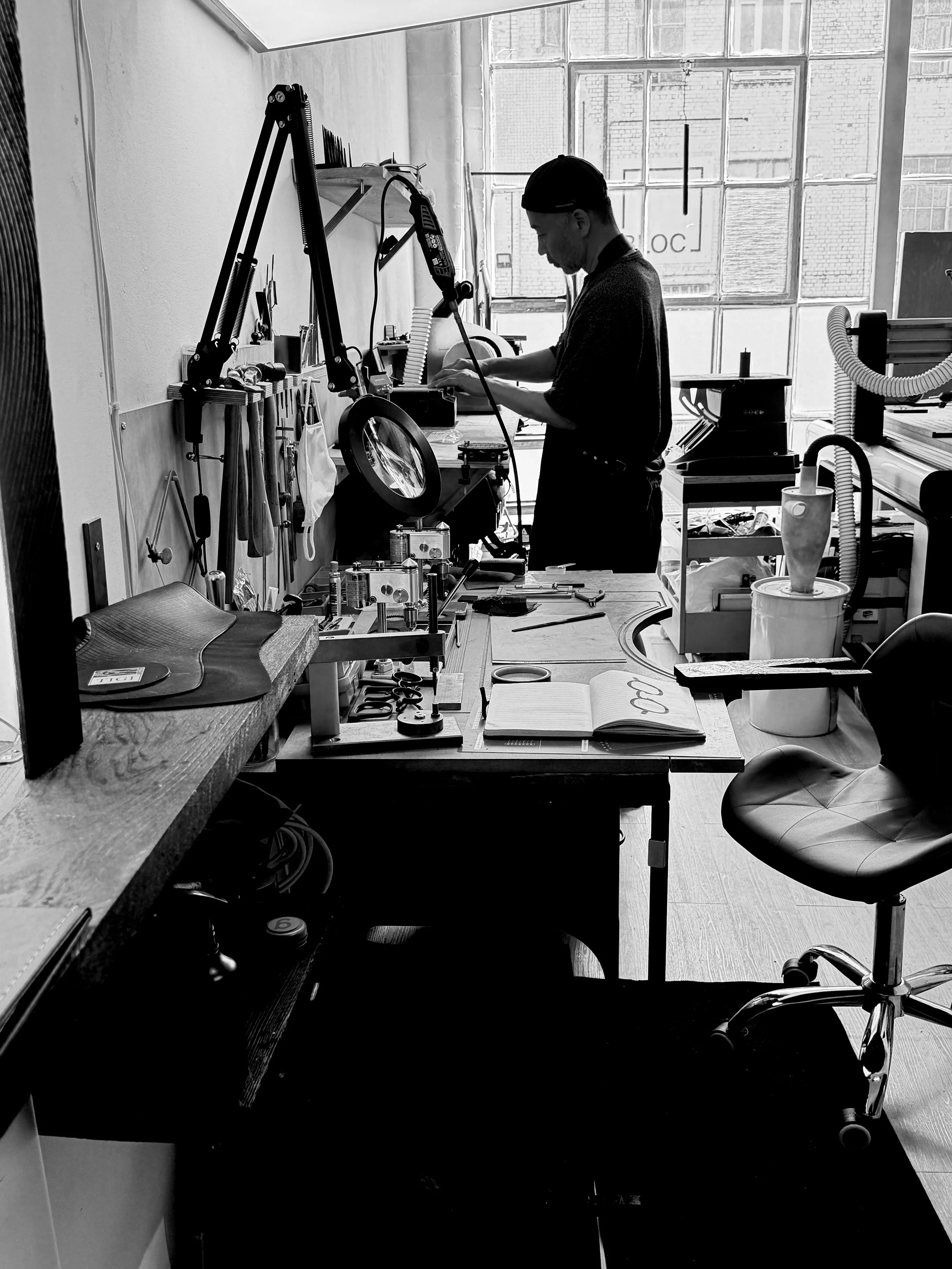
Tools made necessary
I like my tools to be my own. Some I find and modify because I want the bench to look a certain way. Some I have to make because the thing I need does not exist.
The face ruler is one of those.
Frames are specified hinge to hinge. That number describes how a frame was built. It says nothing about what the frame does to a face.
Two other dimensions decide that. Outer edge to outer edge is the line other people see. It sets against the temple and the cheekbone, and a few millimetres either way changes the structure of the whole face. The inside dimension is what the wearer feels, all day, and it has to be right in a different way.
Nothing I could buy read both on a face at once. So I made a ruler that does.
Fit is not enough
A frame can fit and still not belong.
Fit is size, comfort and technical correctness. Belonging is what happens when the frame completes someone's impression instead of disguising it.
This is where the hair work is still present. Line, weight, volume, character, how someone wants to be seen. I read a face at the bench the way I read one on set.
The right frame becomes difficult to separate from the face.
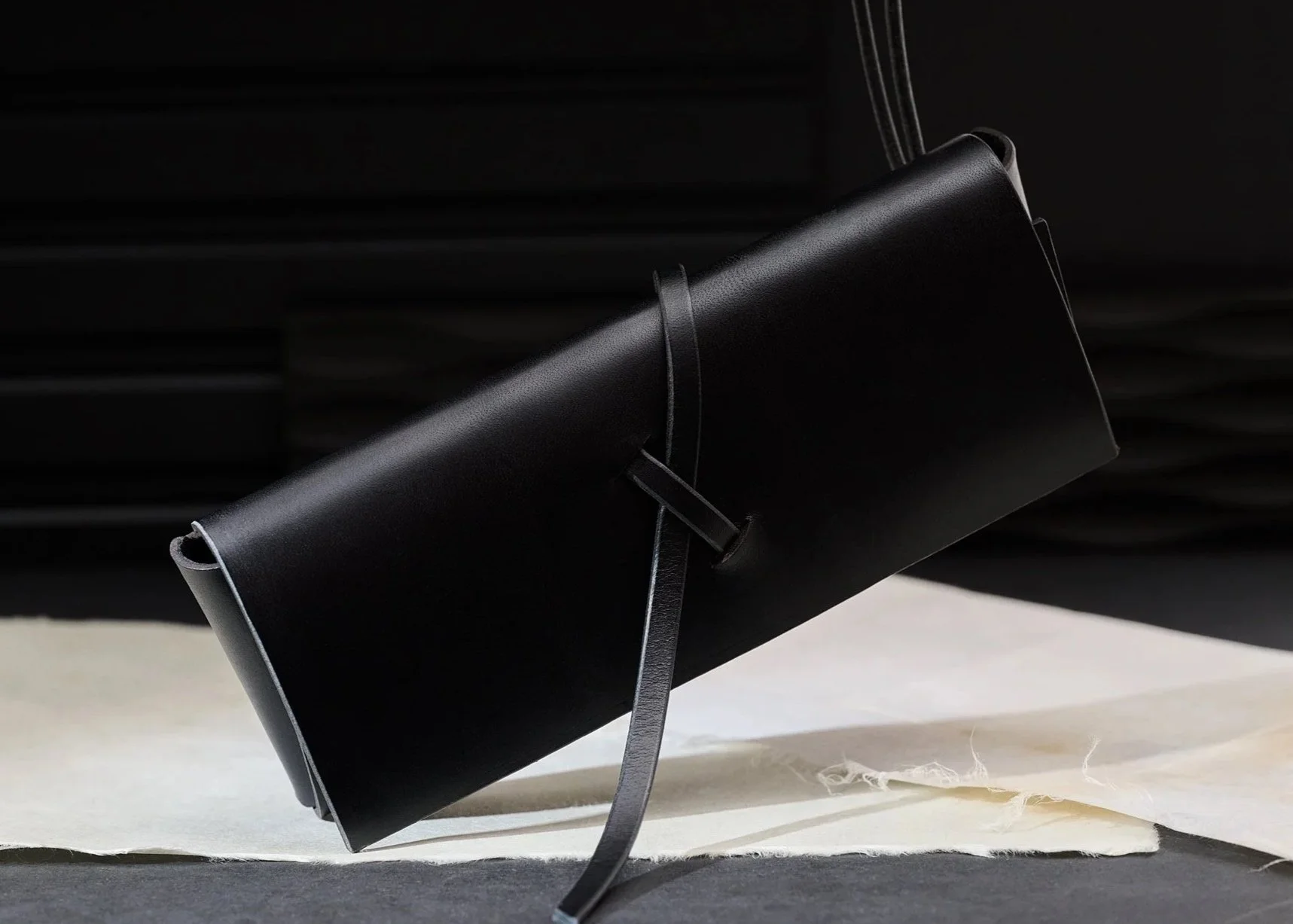
Everything must belong
The work does not stop at the frame.
I make the leather case, assemble the box, prepare the certificate, adjust the branding tools, and choose the lens cloth and the screwdriver. Small objects either support the frame or diminish it.
They are part of how the frame is received, handled, maintained and remembered.
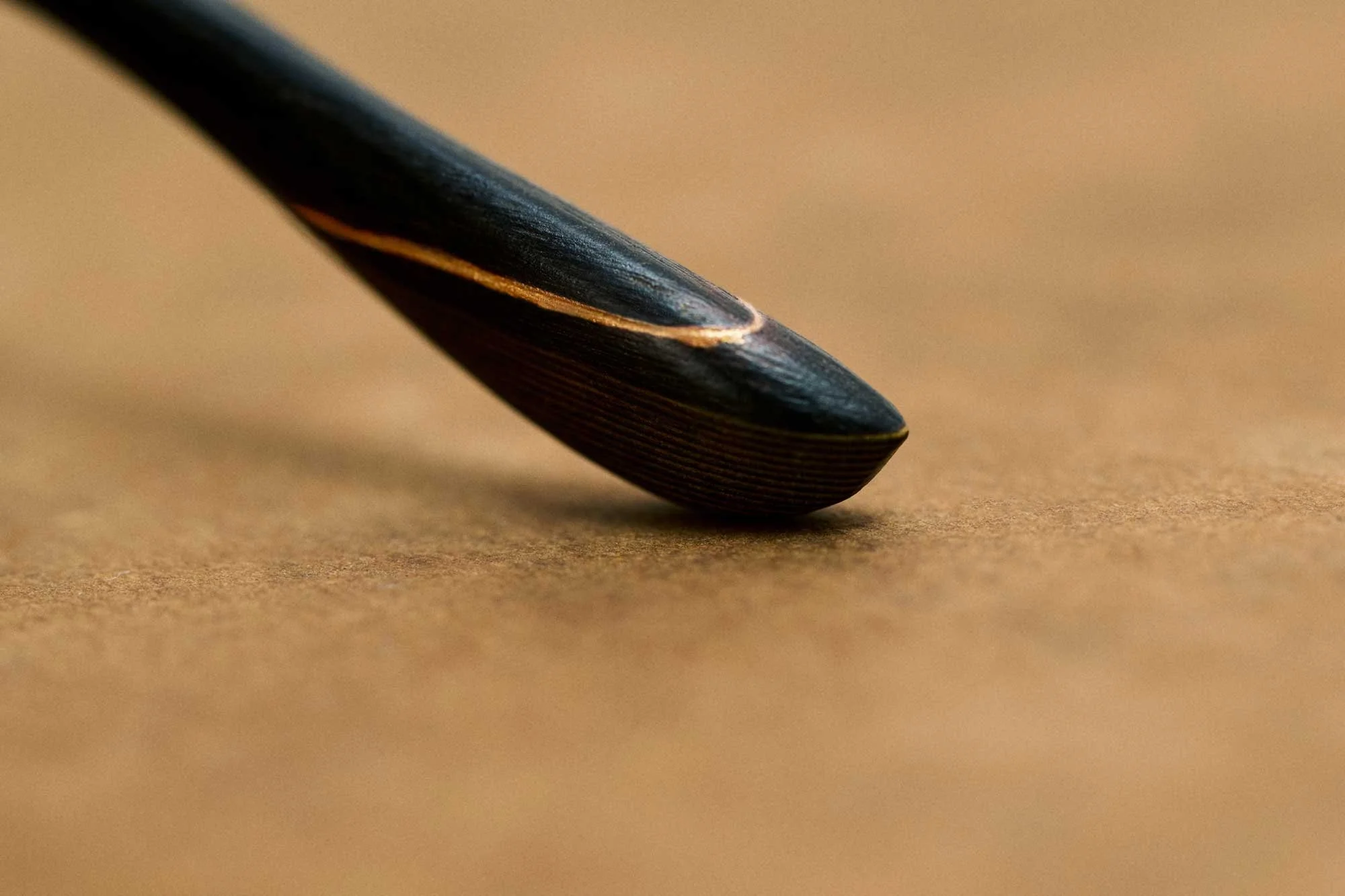
Repair as memory
Every frame stays repairable for as long as it is worn, and the maker who made it is the maker who repairs it. When it is suitable, a damaged frame can come back to my bench for kintsugi repair, the break filled with gold rather than hidden. I am not trying to erase what happened. I want the frame to stay in use, and I want the mark to become part of its history. Repair is another moment of making.
Form before logo.
Fit before explanation.
Repair as memory.
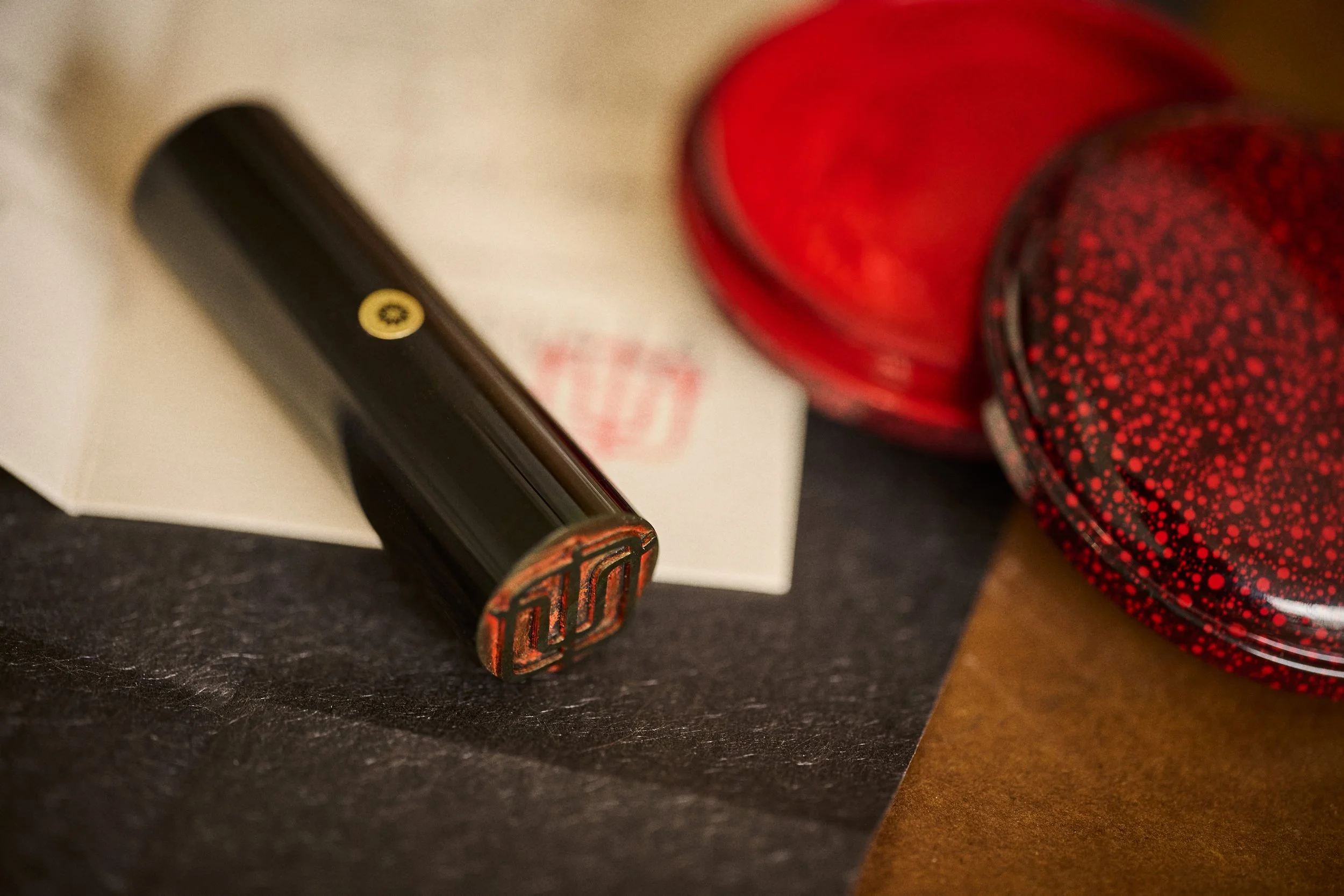
The final mark
The frame, the case, the cloth, the screwdriver, the certificate, the box, the record. Everything inside has passed through the same judgement.
I seal the box with an inkan, the Japanese formal signature.
The frame leaves the bench complete. Time continues the work.
The material holds its shape. A frame cannot be bent afterwards, so the fit is decided before I make it.
To see a frame in hand, come to the bench. Thursday 3 to 7pm, Friday and Saturday 11am to 6pm, by appointment.
-
Material
Compressed paper composite. Paper fibre and phenolic resin, manufactured in Washington State. Stock is FSC-certified and/or recycled.Weight
Type-I 28g frame only, 33g with Zeiss sun lensesType-RO 32g frame only, 38g with Zeiss sun lenses Weights vary slightly between individual pieces.
Components
Stainless-steel hinges. Sun and prescription lenses are glazed by a specialist in the same building as the atelier.Leather Case
Vegetable-tanned leather, oil-edged, made at the same bench. -
Built to remain in use.
One frame, one maker. Full traceability. Fewer transfers of judgment. Serviceable construction with stainless-steel hinges and replaceable lenses and screws. A five-year warranty from the date of completion. Adjustment, repair and selected restoration form part of the object from the beginning.
-
Certification
Tested by Spectroplus Ltd, Liverpool, February 2026.
BS EN ISO 12312-1:2022 + A11:2024, sunglasses and related eyewear. Filter category 2.
Impact resistance: passes the drop ball test to Title 21 CFR 801.410.
Test reports available on request.